
IBC lawyer in Bangalore guidance becomes essential when understanding the minimum default limit under the Insolvency and Bankruptcy Code (IBC).
What is the minimum limit of default required to initiate insolvency proceedings under IBC?
Understanding this threshold is critical because once insolvency proceedings begin before the National Company Law Tribunal (NCLT), it can significantly impact business operations, management control, and financial stability.
What Is the Minimum Default Limit Under IBC?
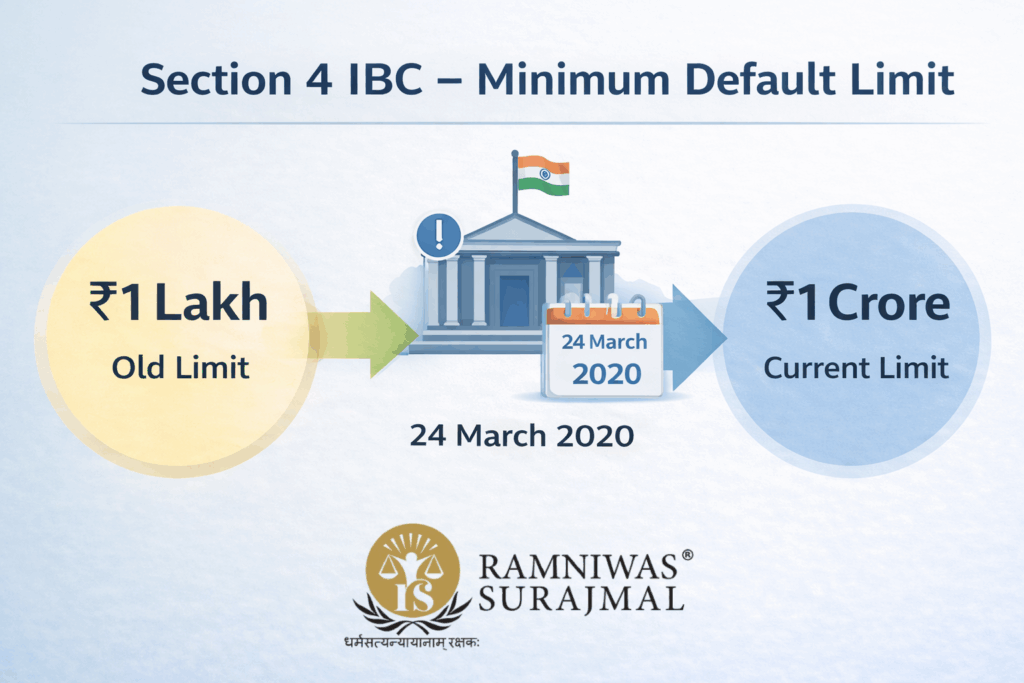
Under Section 4 of the Insolvency and Bankruptcy Code, 2016, the Central Government has prescribed the minimum default amount required to initiate the Corporate Insolvency Resolution Process (CIRP).
Originally, the threshold was
- ₹1 lakh
However, through a notification dated 24 March 2020, the government increased the minimum default amount to
₹1 crore
This means insolvency proceedings can only be initiated if the default amount is ₹1 crore or more.
For a broader understanding of the legal framework, you may refer to the official overview of the. Insolvency and Bankruptcy Code, 2016.
Does the ₹1 Crore Limit Apply to MSMEs?
For the standard Corporate Insolvency Resolution Process (CIRP), the ₹1 crore threshold applies.
However, MSMEs may use the Pre-Packaged Insolvency Resolution Process (PPIRP), which has a lower threshold (generally ₹10 lakh).
Understanding which process applies requires professional guidance from an insolvency lawyer in Bangalore.
Why Was the Threshold Increased?
The threshold was raised primarily to:
- Protect MSMEs from insolvency action over minor disputes
- Prevent misuse of IBC as a debt recovery shortcut
- Reduce burden on NCLT benches
- Stabilize businesses during economic stress
The purpose was to ensure that insolvency proceedings are reserved for serious financial defaults.
Who Can File Under IBC?
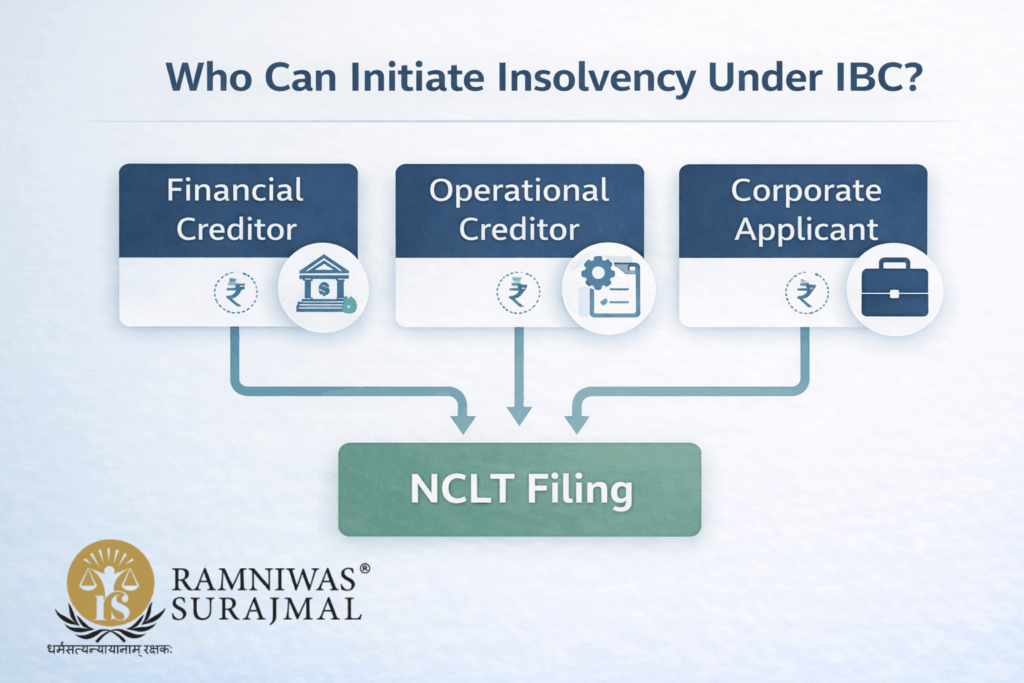
If the ₹1 crore default threshold is met, the following parties can initiate proceedings:
- Financial creditors (banks, NBFCs)
- Operational creditors (suppliers, vendors)
- Corporate applicants (the debtor company itself)
Before filing, it is advisable to consult an experienced IBC lawyer in Bangalore to assess eligibility and documentation.
For structured assistance in insolvency matters, you can explore professional support here: IBC & NCLT Legal Services in Bangalore.
What Happens After Filing Before NCLT?
Once an application is admitted:
- Moratorium under Section 14 begins
- Insolvency Resolution Professional (IRP) is appointed
- Board of directors’ powers may be suspended
- CIRP formally starts
This can significantly affect business control and creditor rights.
An experienced NCLT lawyer in Bangalore ensures procedural compliance and strategic defense or enforcement.
Can Creditors Combine Claims?
In certain situations, creditors may combine claims to reach the ₹1 crore minimum threshold. However:
- Documentary proof is mandatory.
- Legal interpretation depends on facts.
- Tribunal precedents may apply
Strategic advice from an experienced NCLT law firm in Bangalore ensures correct filing and compliance.
Strategic Importance of the Default Threshold
Understanding the default limit helps:
For Creditors:
- Evaluate filing eligibility
- Avoid rejection due to insufficient threshold
- Strengthen insolvency petitions
For Corporate Debtors:
- Assess insolvency exposure
- Explore restructuring options
- Negotiate before CIRP admission
Early consultation can prevent severe financial consequences.
What Is the Limit of Default Under IBC?
The current minimum default limit under IBC is
₹1 crore (as per the 24 March 2020 government notification under Section 4).
This threshold applies to corporate insolvency proceedings before NCLT.
Both creditors and companies must understand this limit before initiating or responding to insolvency proceedings.
If you are facing insolvency risk or planning recovery action, consulting an experienced IBC lawyer in Bangalore or NCLT lawyer in Bangalore ensures strategic clarity and procedural protection.